This article is for general information and isn’t a substitute for medical or mental health care. If you’re dealing with anxiety, trauma or depression, please reach out to a qualified professional.
When stress builds up, it often shows up in the body first: a tight chest, shallow breathing, clenched jaw, restless sleep. Breathwork is simply the practice of breathing in a deliberate, structured way. It’s free, it takes a few minutes, and you can do it anywhere.
Slow, controlled breathing, especially with longer exhales, nudges your nervous system toward its “rest and digest” mode. That’s why a few calm breaths can take the edge off a tense moment. And sometimes, when the body finally relaxes, feelings you’ve been holding back come to the surface too. That’s normal.
Here are 5 gentle techniques that are easy to learn, plus a simple 5-minute routine to start with.
Before You Start
- Sit or lie down somewhere comfortable and quiet.
- Breathe through your nose unless a technique says otherwise.
- Keep it gentle. If you feel dizzy, tingly or anxious, return to normal breathing.
- Never practice breathwork while driving, in water or anywhere fainting could be dangerous.
1. Belly Breathing (Diaphragmatic Breathing)
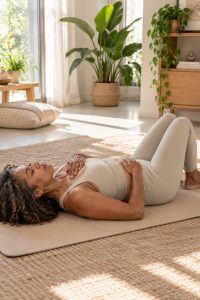
Place one hand on your chest and one on your belly. Breathe in slowly through your nose so the hand on your belly rises while your chest stays fairly still. Exhale slowly through pursed lips. Practice for 3 to 5 minutes. This is the foundation for every other technique, and a great one to do in bed before sleep.
2. Box Breathing
Inhale for a count of 4, hold for 4, exhale for 4, hold for 4. Repeat for 4 to 6 rounds. The steady rhythm gives your mind something to focus on, which makes it useful before a stressful meeting, a phone call or a presentation. If the holds feel uncomfortable, shorten them to 2.
3. The 4-7-8 Breath
Breathe in quietly through your nose for 4 counts, hold for 7, then exhale fully through your mouth for 8 counts. Start with 4 rounds. The long exhale is what makes this one so calming. If 7 and 8 feel too long, keep the same ratio with shorter counts, like 2-3-4.
4. The Physiological Sigh
Take a full breath in through your nose, then a second, shorter “top-up” inhale, and finish with a long, slow exhale through your mouth. One to three sighs can bring a quick sense of relief. In a 2023 study from Stanford, people who practiced this “cyclic sighing” for 5 minutes a day reported bigger improvements in mood than a group that practiced mindfulness meditation (Balban et al., 2023).
5. Alternate Nostril Breathing
Use your right thumb to close your right nostril and inhale through the left. Close the left nostril with your ring finger, release the right and exhale through it. Inhale through the right, close it, and exhale through the left. That’s one round. Continue for 5 to 10 rounds. Many people find this traditional yoga technique steadying and focusing.
A 5-Minute Breathwork Routine to Release Tension
- 1 minute: belly breathing to settle in.
- 2 minutes: box breathing or 4-7-8 breathing.
- 1 minute: three physiological sighs, then normal breathing.
- 1 minute: sit quietly and notice how you feel. If emotions come up, let them; you don’t need to analyze them.
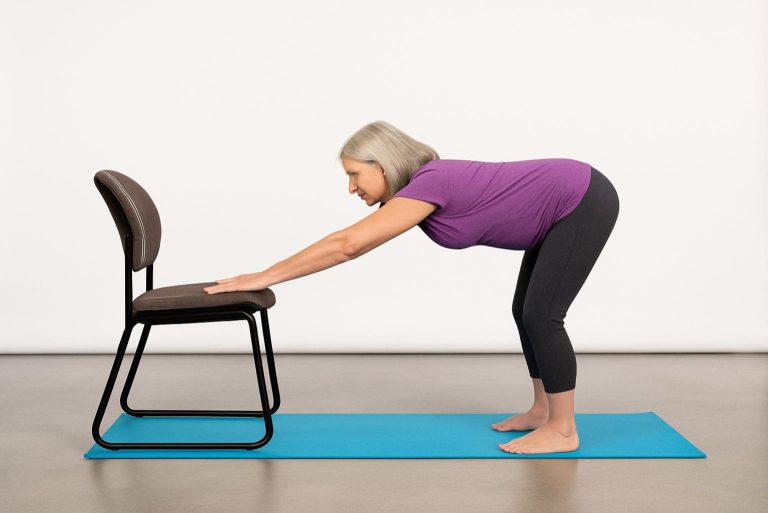
Try it in the evening, during a work break, or whenever you notice your breath getting shallow. Pairing it with gentle movement like chair yoga or a short yoga practice works especially well.
When to Be Careful
The gentle techniques above are suitable for most people. Faster, more intense styles of breathwork (rapid breathing or long breath holds) are a different story. Talk to your doctor first, and avoid intense breathwork, if you:
- Are pregnant
- Have a heart condition, high blood pressure, epilepsy or a respiratory condition
- Experience panic attacks, or are in treatment for a mental health condition
Breathwork can be a lovely support for your wellbeing, but it isn’t a replacement for therapy or medical care.
The Bottom Line
You don’t need years of practice or special equipment to benefit from breathwork. A few minutes of slow, intentional breathing can calm your body, clear your head and make space for whatever you’ve been carrying. Pick one technique from this list, practice it daily for a week, and notice what changes. It also makes a great part of your evening wind-down routine.
You’ll Also Love
Coming Soon: Free 5 Calming Breathing Techniques Card (printable)
We’re putting together a free printable for you. Follow us on Pinterest so you don’t miss it, plus fresh ideas every day.